
You can see a lot of unexpected things when you’re seated in the right place in a Cooked Food Centre, far-from-central Hong Kong. From my perch behind the till/cashier, getting a feel for the service rhythms and human melodies of the place, one can also get a firsthand look into all of the different ways that the practice of cooling clothing/ventilated vests takes shape:

…from different colorways and materials…

…to varied configurations and quantities of fans…

…to whether fans are built-in, or attached aftermarket…
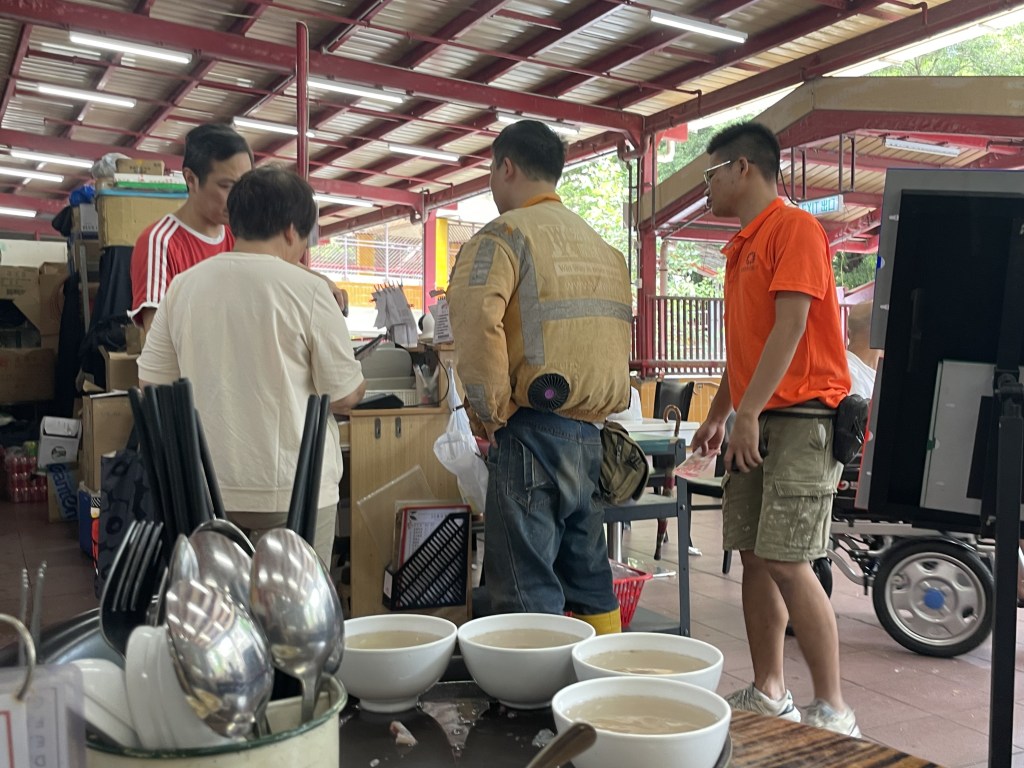
I had more questions, but was also intent on staying in observation mode rather than active inquiry, so those questions would have to remain unanswered. Foremost amongEach one woven around a different individual story of its wearer, but yet all tell the same story of the continuing importance of regulating humans’ core temperatures on an increasingly warming planet – one where people are still relied upon to build and maintain our (also rapidly heating, and increasingly rained-on, and ever-quicker-falling-apart-in-the-face-of-climate-shifts) infrastructure.
Each garment is bound to a different individual story of its wearer, yet all are telling the same story of the continuing importance of regulating humans’ core temperatures on a warming planet – a planet where, in most places, humans are still integral to building and maintaining our (also rapidly heating, increasingly rained-on, and ever-quicker-falling-apart-in-the-face-of-unforeseen-climactic-shifts) infrastructure.
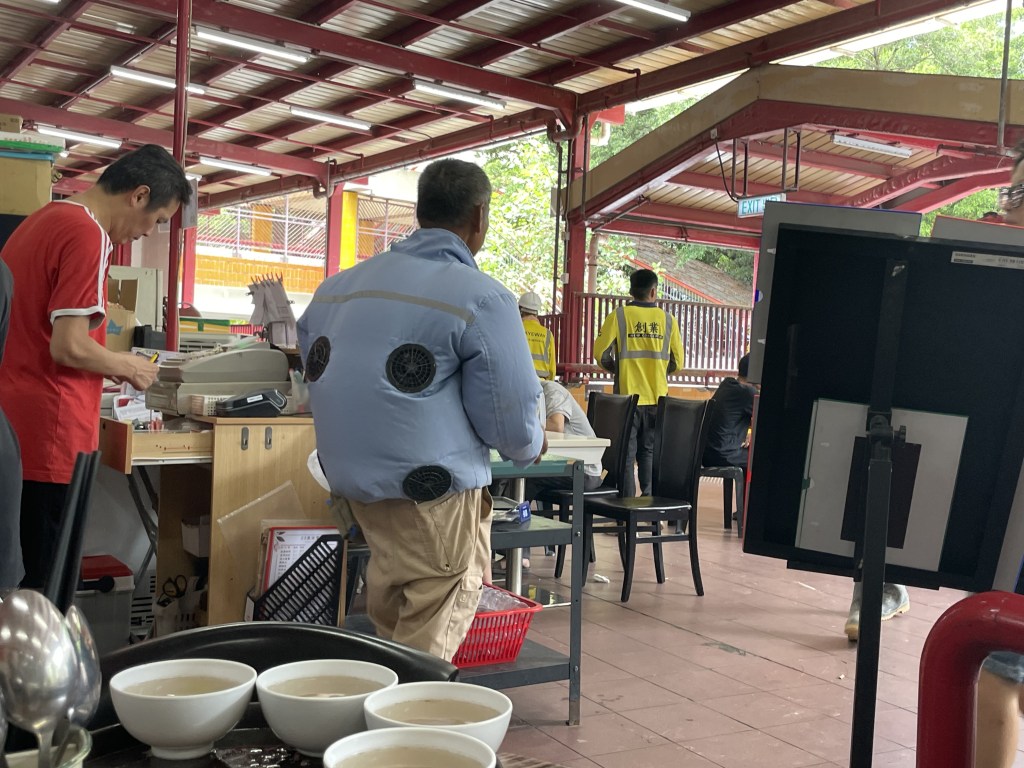
Also, there’s the negative feedback loop to consider of the electricity needed to charge these wearable coolant devices’ batteries creating more emissions, which in turn accelerates the effects of climate change (Hong Kong gets about .2% of its electricity from renewable sources), in turn making the planet hotter, driving more people to adopt non-renewably-powered coolant-clothing, and so on.
Finally, a few more unasked questions, addressed more to the makers than the wearers: considering the above, what would piezoelectrically powered apparel look like, where integrated fans are powered simply through a wearer’s natural motion? Or integrated solar-harvesting fabric/tapes that could passively charge fan batteries? Or other more renewable, less carbon-intensive ways of creating the same outcome?
 Square Inch Anthro / 平方英寸人类学