

Each small, improvised repair extends the life of these foundational objects for a Hong Kong teashop — another immersion in steam for dim sum steamers, another scalding pour from the kettle’s chipped neck. Each fix contributes to a quiet design language that favors continuity over convenience.
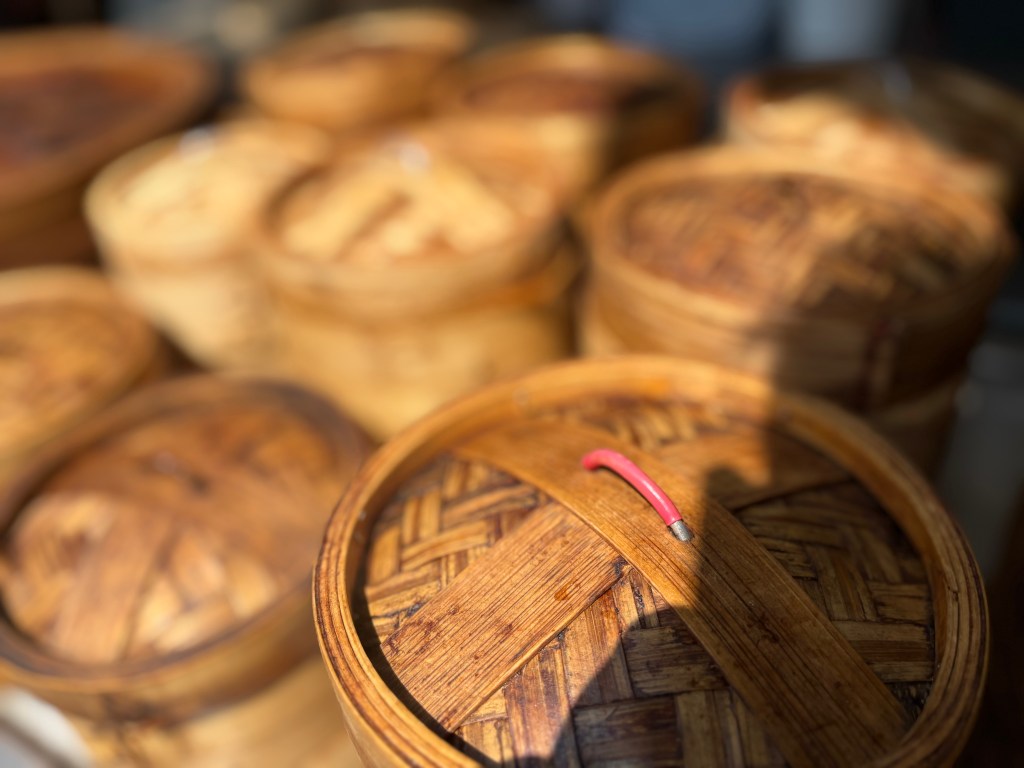
These interventions tell a story of resilience and hodo-hodo — the Japanese concept of “just enough” that Taku Satoh explores in Just Enough Design. They embody a pragmatism that resists replacement, embracing the wear and tear that time inevitably brings:
The kind of joint that gets your mouth watering is in a wooden building, now weathered with time. The charcoal ink calligraphy on the white のれん noren, or doorway curtains, has faded from repeated washings, and the stubborn oil stains on the well-worn tables and chairs that defy scrupulous cleanings only heighten the shop’s appeal. The menu items, handwritten on strips of age-yellowed paper affixed to the walls—who knows when—appear to have been there forever.
_Taku Satoh, Just Enough Design
Like the oil-slicked chairs and faded calligraphy of Satoh’s well-loved ramen shop, these repairs hint at something deeper: that which has lasted likely works well — at least enough to keep serving, and stay in business.
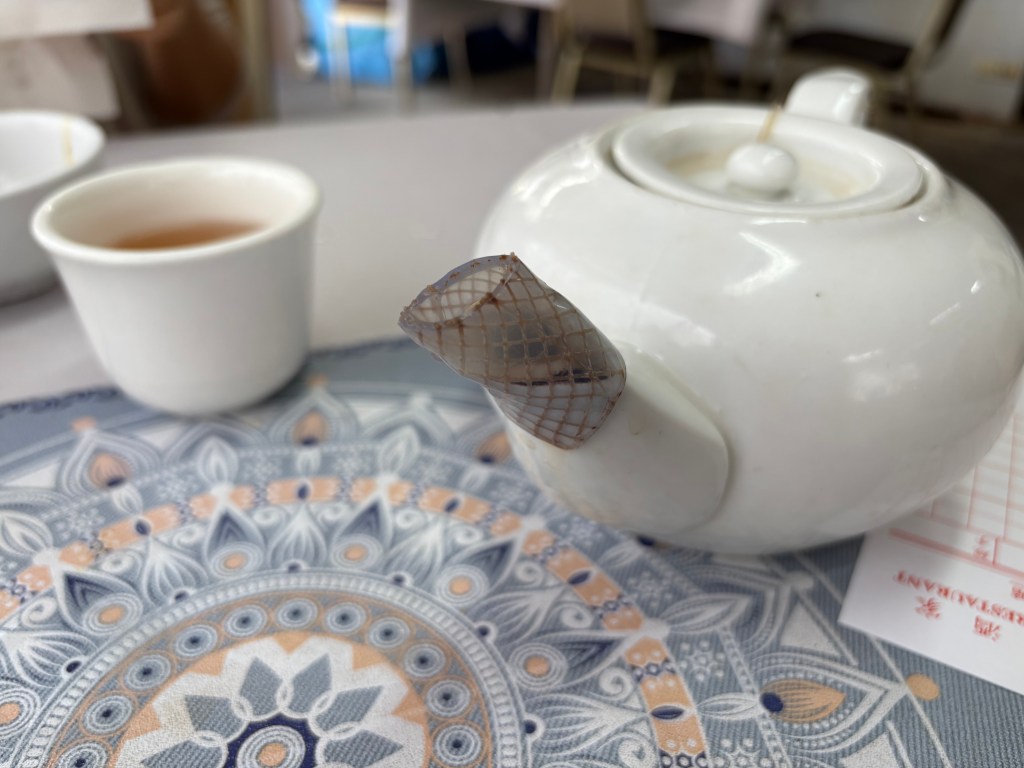
Though likely done without aesthetics in mind, they generate one all their own — a texture of care specific to the square inch of Hong Kong teashops. Plastic, wire, bamboo, ceramic — all stitched together in service of another meal, another pot, another day.
Vernacular care, rendered visible.

 Square Inch Anthro / 平方英寸人类学