
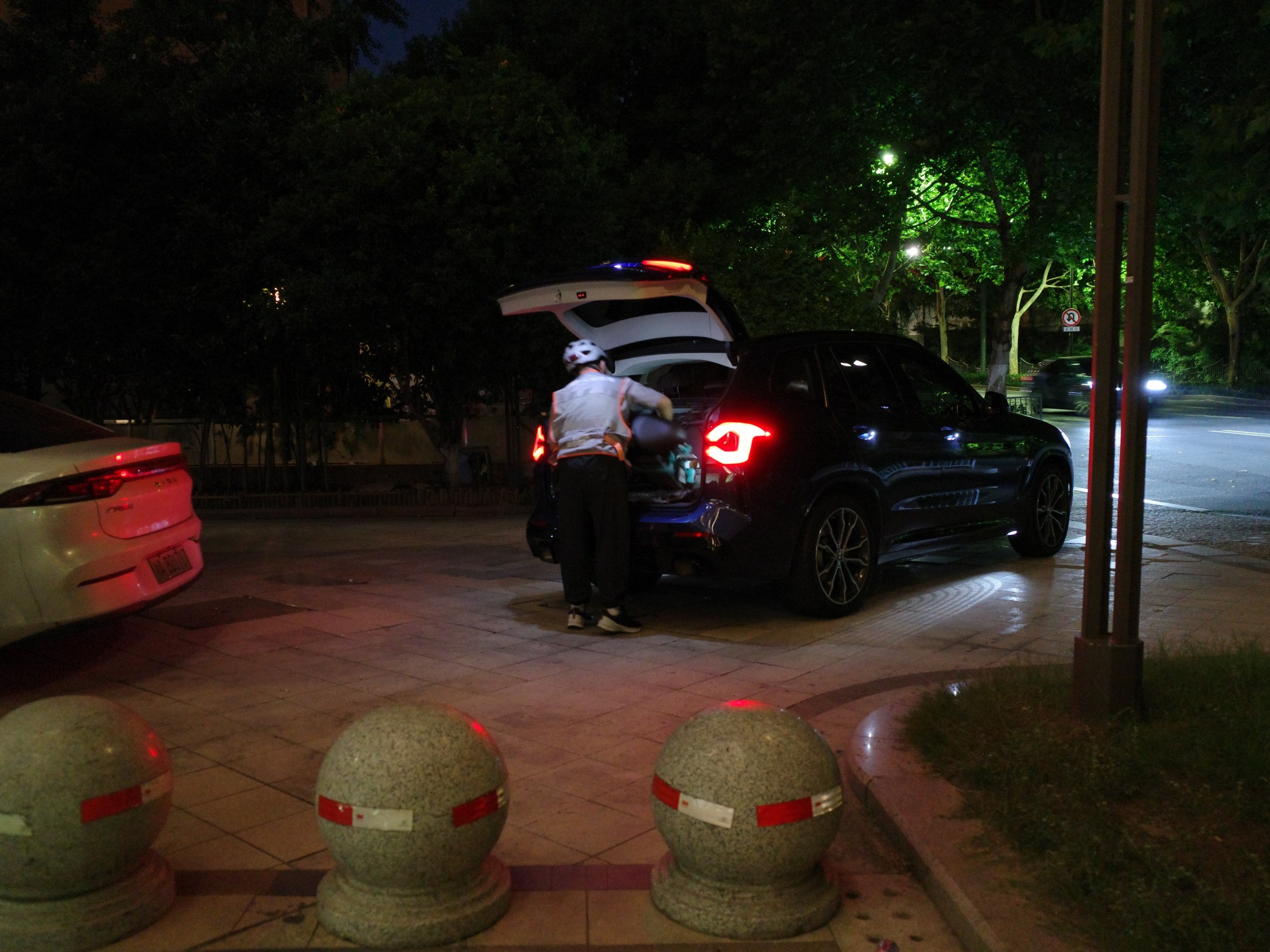
Fieldwork for the past two weeks in China has meant a blur of trains, buses, and motorbikes, from boardroom to hotel conference rooms to consumers’ living rooms. The specific client is confidential, but the work touched one of the country’s fastest-growing digital industries, worth tens of billions depending on how you count.
More important than the travel itself was what I was reminded of along the way: in China, mobility (like so many elements of modern life) is not simply a matter of A-to-B movement, but a ballet of complex-but-coordinated human and non-human infrastructures layer-caked atop one another, moreso than most other places I’ve been.
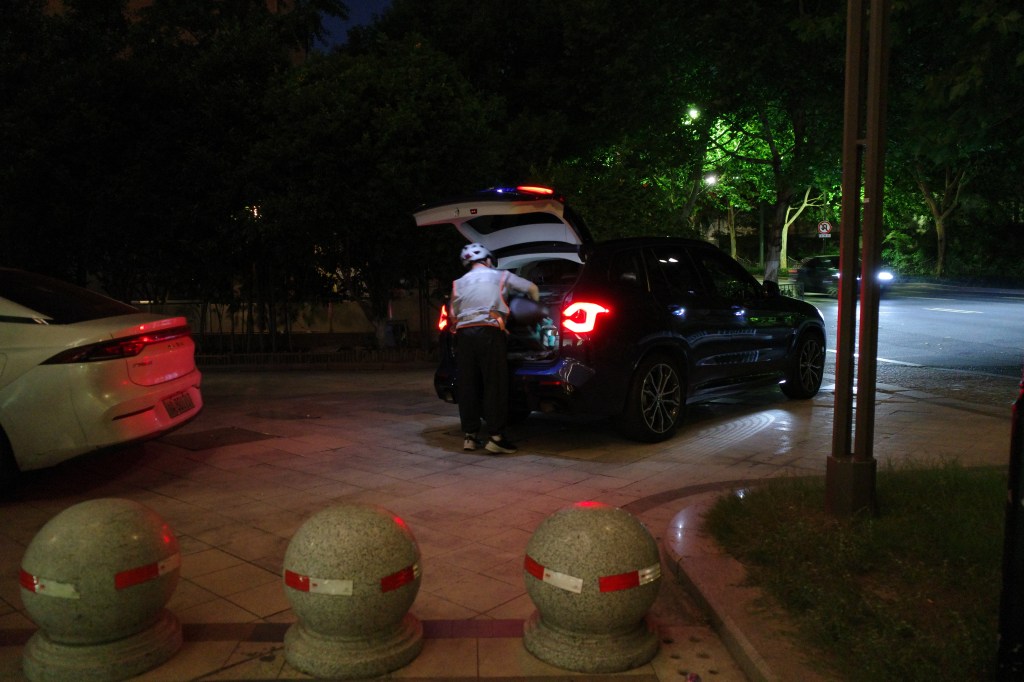
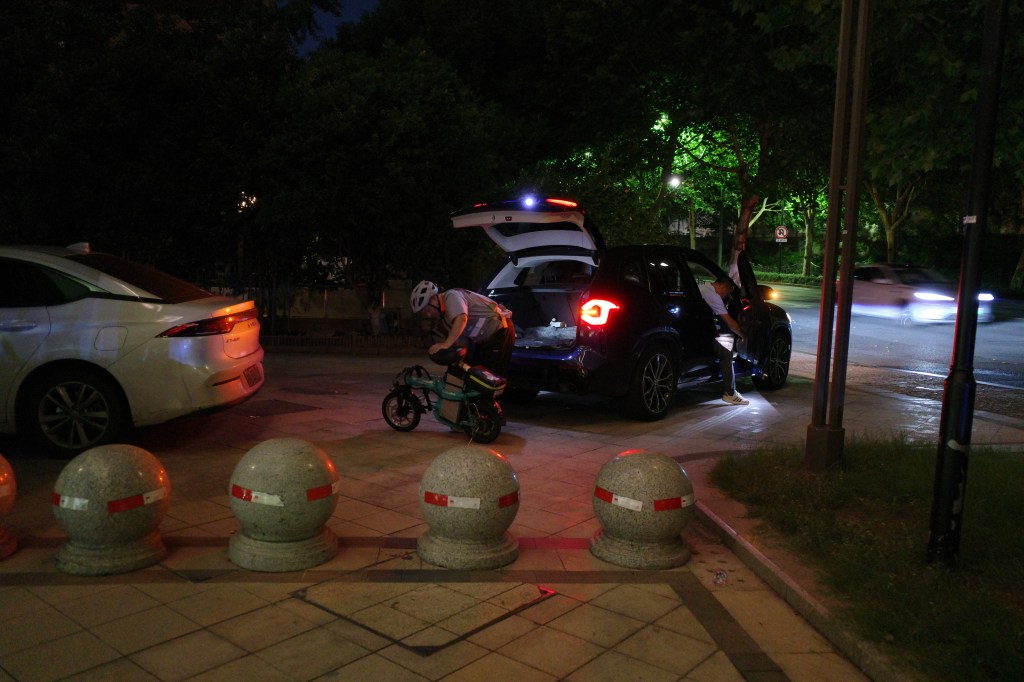
One night outside a Hangzhou hotel, I was reminded of a service I’d seen before, but failed to recognize for its uniqueness: known as “e代驾” (or 酒后代驾, translated to “substitute driving after drinking”), it is designed for when you may find yourself too tipsy to get behind the wheel of your car, but are already out on the town. E代驾 summons you a driver through one of China’s major platform apps. It is accessible through WeChat (a hybrid of WhatsApp, Facebook, and PayPal), Alipay (similar to Apple Pay but with a much broader ecosystem), Baidu Map (like Google Maps), Gaode/Amap (akin to Waze or Google Maps but with much richer local data).
Click a button within any of these platforms and, before long, a driver pulls up on a foldable electric scooter, tucks it into your vehicle’s trunk, and drives your car home for you (with you in it, natch). Once you’re dropped off, out comes the scooter, and they’re on their way to their next customer.
Beyond the almost-magical-feeling and deeply trusting nature of this service, I’m also interested in the layers that align to make this Bratton-inspired “stack” work smoothly:
Hardware
- Foldable e-bikes, powered by affordable batteries, mass-manufactured and benefitting from China’s “complete industrial chains,” the capability cascades where breakthroughs in one sector spill into many others. In this instance of a capability cascade, lithium-ion cells were scaled through consumer electronics and then smartphones, which accelerated cost declines. This made electric scooters more affordable, and many of those same factories now produce larger packs for buses, cars, and grid storage, with each new demand lowering costs across the board.
- Ubiquitous surveillance and traffic cameras that guarantee accountability in what could otherwise be a risky encounter between strangers.
Software and Digital Infrastructure
- Identify verification and payment rails that make it safe enough to hand over your car keys to a complete stranger, knowing it all rests upon a platform economy that has normalized the full visibility and verifiability of every identity-connected transaction.
Legal
- Harsh drunk-driving penalties, including license revocations of up to five years and mandatory jail terms written into the criminal code for significant offenses, enforced by frequent checkpoints and the gaze of omnipresent traffic cameras.
Urban Infrastructure
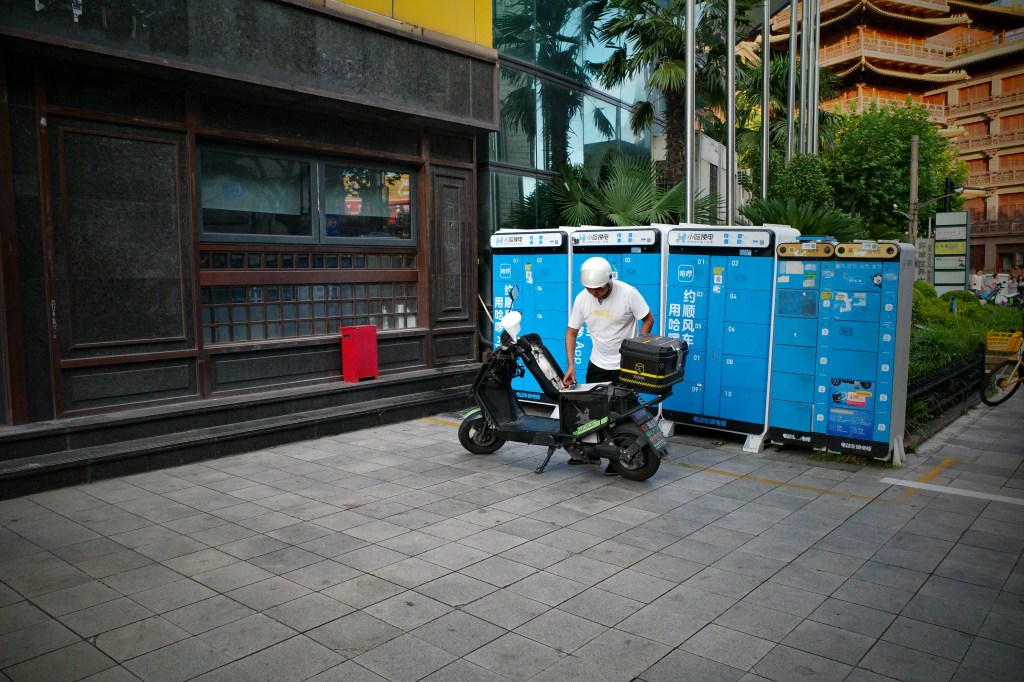
- Sidewalk charging points rolled out through five-year plans, searchable on map apps like GaoDe/Amap. More than mere commuter conveniences, these allow the scooter drivers to keep their batteries topped-off between trips, ensuring continuity of service.
Human and Social
- A large pool of drivers with both time and skill, willing to be on standby and brave late hours and challenging weather to help get people home safe. A customer base that owns cars, has disposable income, fears the penalties of drunk driving, and trust the digital platforms that mediate the exchange.
What these layers reveal depends on how you look. From one angle it is a design intervention, coordinating a complex ballet of hardware and software into everyday convivial behaviors. From another it is a politics of space, showing how law, surveillance, and inequality reallocate risk. From yet another it is an infrastructural story, where basic technologies like batteries, chargers, and traffic cameras, scaled to a massive degree, reshape how Friday nights unfold, reducing the risks of a boozy night out. As Bruno Latour might have put it, the service itself emerges from an actor–network of foldable scooters, lithium-ion cells, drivers, payment rails, police checkpoints, and anxious customers.
Nearby, Japan’s “daiko” accompanied driving service, often tied to U.S. military bases but also valued by locals, remains a niche convenience. South Korea’s daeri unjeon has become a familiar and mainstream mobility option, enabled by the messaging app Kakao. Yet nowhere outside China has seen the same level of routine use, usually due to weaker enforcement, higher labor costs or lower labor skills, or inadequate physical or digital infrastructure. In contrast, e代驾 alone has provided more than 400 million rides across over 400 cities since its founding in 2011.
If cheap lithium-ion batteries and omnipresent cameras can together reshape the ethics of nightlife in one country, what does that suggest about the services a city enables or forecloses? Every stack encodes choices about who moves, who moves others, and who carries the risk. Compared to this, what does your own city’s stack enable, and what does it hold back?
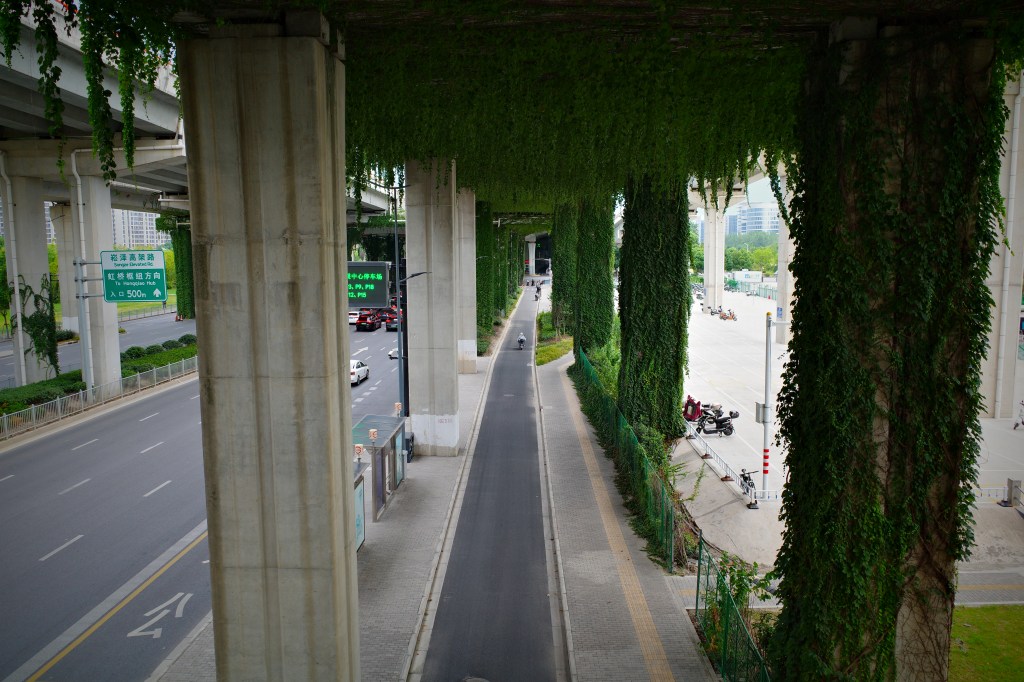
For a truly excellent look at how Shanghai gets around, I would highly recommend checking out Dan Hill’s series, Small Vehicles of Shanghai — DeepSeeking the city.

